
LOS ANGELES, September 22, 2024 – In the challenging world of addiction recovery, where exploitation often preys on the most vulnerable, the story of Noah Fischler stands as a testament to hope and resilience. A former victim of body brokering—a predatory practice where individuals seeking treatment are exploited for profit—Fischler has turned his life around and now dedicates his energy to saving lives through his work with the non-profit organization End Overdose.
Fischler’s journey, first chronicled in The Unseen Epidemic of Body Brokering and the Battle for Ethical Addiction Treatment, shed light on the devastating impact of body brokering, a practice that continues to plague the recovery community. The homeless population is particularly vulnerable and often targeted by body brokers, who exploit their desperation and increase the risk of overdose. Body brokers prey on individuals with no resources, offering them money or drugs in exchange for entering treatment programs.
Now, as a key figure with End Overdose, Fischler is on the front lines, combating not just the opioid crisis, but the unethical behavior that undermines the integrity of addiction treatment.
Founded by Theo Krzywicki, an EMT and firefighter in Pasadena, California, after losing his fiancée to a fentanyl overdose, End Overdose is dedicated to educating the public on how to combat overdoses, particularly those caused by fentanyl—a synthetic opioid that has devastated communities across the nation. Through training and outreach at music festivals like Coachella and the Electric Daisy Carnival (EDC), the organization has taught thousands of people how to administer life-saving naloxone, also known by its brand name Narcan.

The Los Angeles County Department of Public Health recently released its Fifth Annual Report on mortality among people experiencing homelessness (PEH). Between 2021 and 2022, the overall mortality rate saw a slight increase of 2%, a sharp contrast to the devastating 56% spike from 2019 to 2021. This leveling off is largely credited to increased distribution of naloxone, an opioid overdose reversal drug.
Overdose remains the leading cause of death among PEH, accounting for 37% of all fatalities in 2022. However, the growing presence of fentanyl in overdose cases continues to pose a severe threat. Despite the plateau, PEH are 41 times more likely to die from overdose than the general population, emphasizing the need for ongoing harm reduction efforts.
Los Angeles County is taking action as part of the new Skid Row Action Plan, spearheaded by LA County Supervisor Hilda Solis. This plan includes the creation of a Harm Reduction Health Hub on Skid Row, specifically designed to address the critical needs of the area’s vulnerable population, particularly those at high risk of overdose and substance use-related deaths.

For Fischler, the mission of End Overdose is deeply personal. His own experiences with body brokering left him motivated to create change.
“I joined End Overdose because I saw so many people enabling harmful lifestyles in homeless encampments,” Fischler shared. “I wanted to be the person that goes out there, not to enable, but to offer a way out and potentially save a life.”
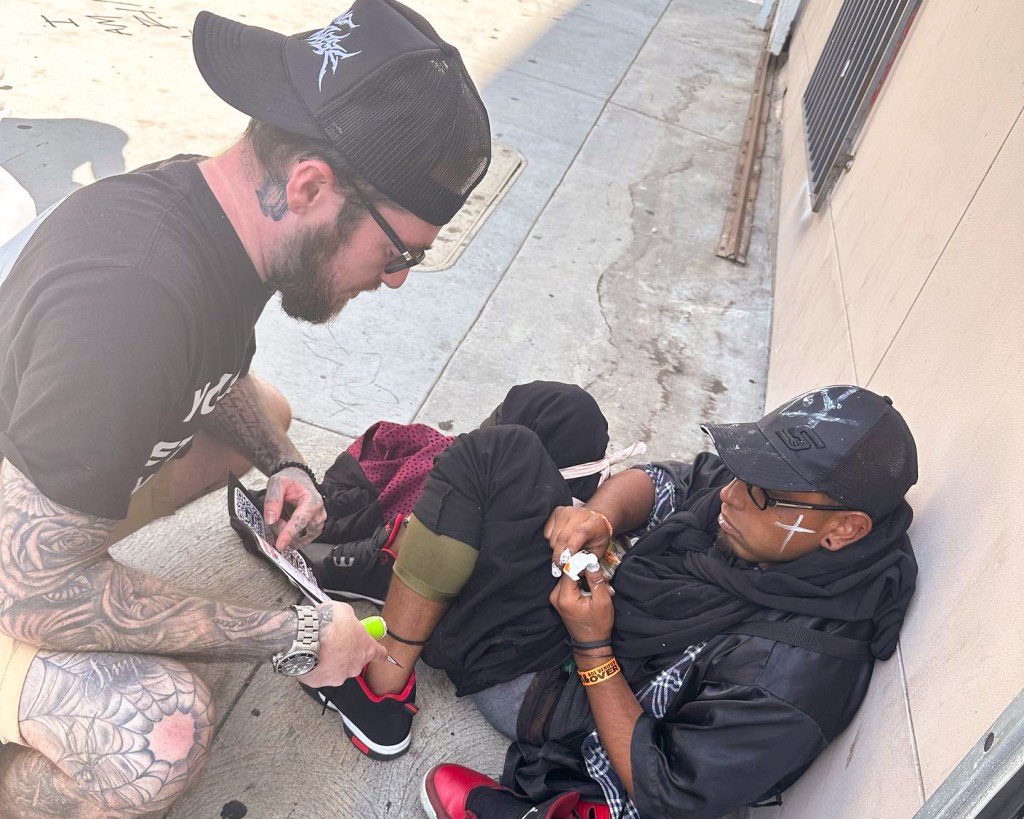
With his new role as the Director of Homeless Outreach, Fischler organizes events to train individuals in administering Narcan and to distribute the medication in homeless encampments across Southern California. His work is focused on providing those struggling with addiction the tools to survive—and hopefully, to recover.
A recent study by The National Library of Medicine highlights the need for ongoing harm reduction efforts in Skid Row, particularly programs like End Overdose, to prevent fatalities from overdoses and reduce the fear associated with using Narcan. Data from the Homeless Health Care Los Angeles Center for Harm Reduction indicates that fear of arrest significantly affects Narcan users, especially those aged 30-39. Despite protective measures such as California’s Good Samaritan law, fears about contacting emergency services during an overdose remain, highlighting the critical need for effective interventions in this vulnerable community.
Fischler’s efforts have been profound. Over the past year, his team has trained over 455 individuals on how to properly administer Narcan. Additionally, he has personally helped get 20 to 30 people off the streets and into treatment, regardless of their insurance status or ability to pay.
“It’s not about the money—it’s about saving lives,” he emphasizes.
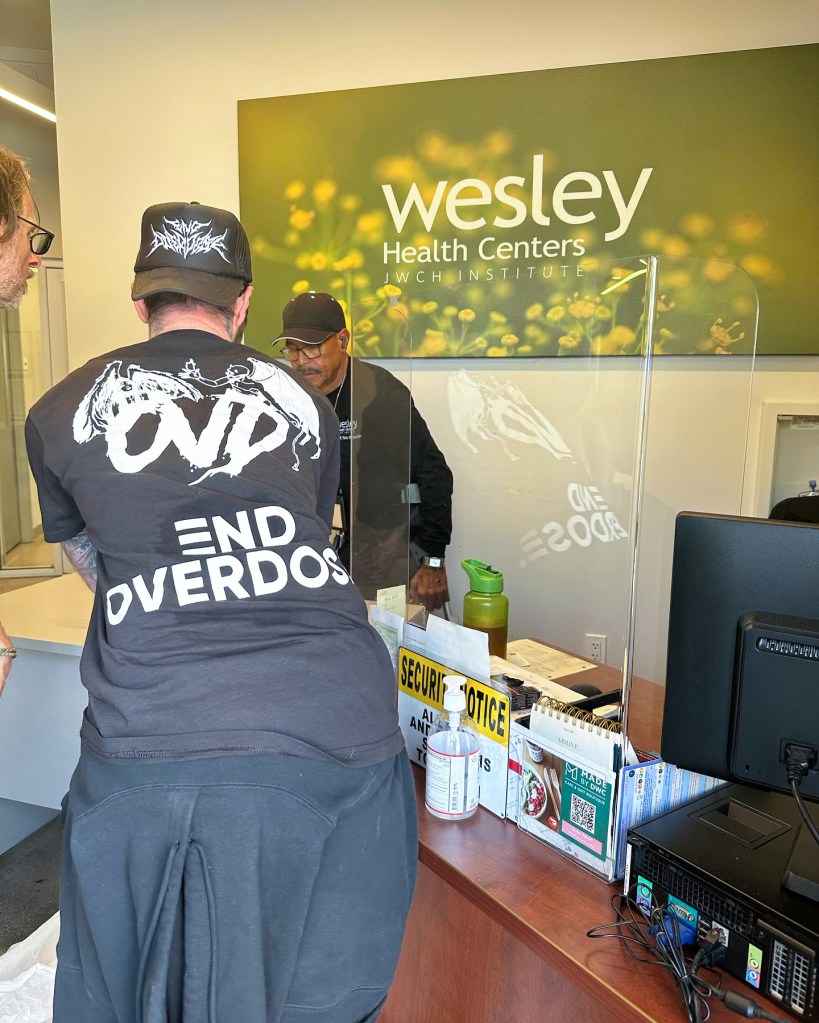
One of Fischler’s most anticipated initiatives is an upcoming event on October 22nd, where he will host a “Coffee Connection” in Santa Ana. The event will feature a recovery story inspired by Conscious Recovery, a transformative approach to addiction treatment founded by TJ Woodward, which emphasizes the inherent wholeness beneath addictive behaviors and shifts the conversation around recovery. Following the story, participants will take part in a Narcan training session before heading to the Santa Ana Riverbed, a known area for homeless encampments, to distribute Narcan.
But for Fischler, it’s about more than just handing out medication.
“I want to be intentional in these interactions,” he said. “When you hand someone Narcan, you’re not just giving them a tool, you’re offering them hope. You’re showing them that their life matters, that someone out there cares enough to help them, and that there’s a way out.”

Noah Fischler hands out Narcan to individuals experiencing homelessness during an End Overdose event on Skid Row in Los Angeles, California. (Photo by Save a Life)
Fischler’s path from a victim of body brokering to a leader in addiction recovery advocacy illustrates the profound change one individual can make in a broken system. While the opioid crisis rages on and unethical practices continue to surface in the treatment world, his work with End Overdose offers a glimmer of hope.
“There are people dying, and every life is worth saving,” Fischler says, echoing the organization’s core mission. “The person on the street is a somebody to someone, and addiction doesn’t define who they are. They’re just struggling, like I once was. But with the right help, they can recover, too.”
As End Overdose grows and reaches more communities, Fischler’s dedication to ethical recovery practices and lifesaving outreach will continue to inspire and empower others to join the fight against addiction and the harmful practices that have long overshadowed its treatment.
 Rewrite the Narrative
Leave a comment